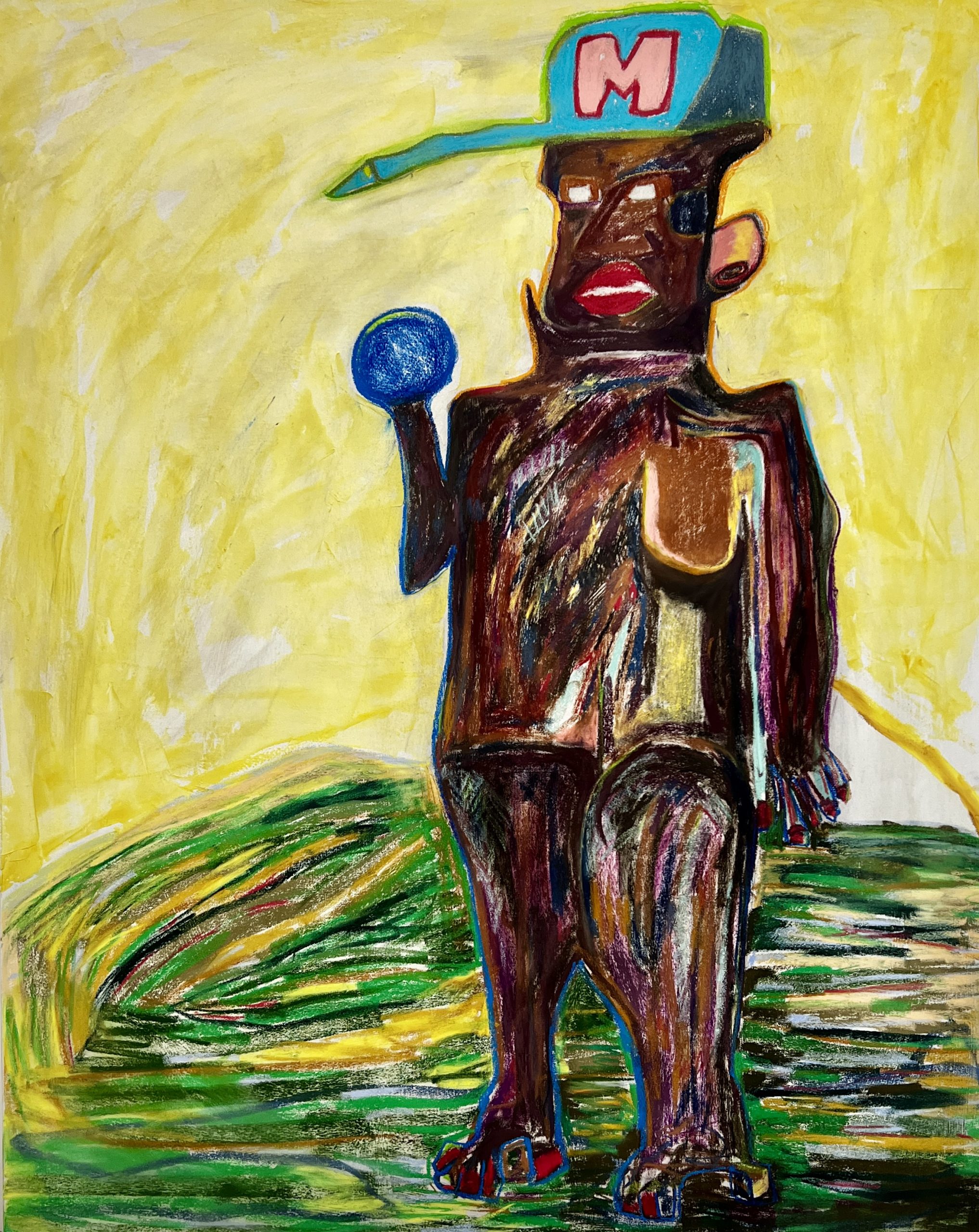
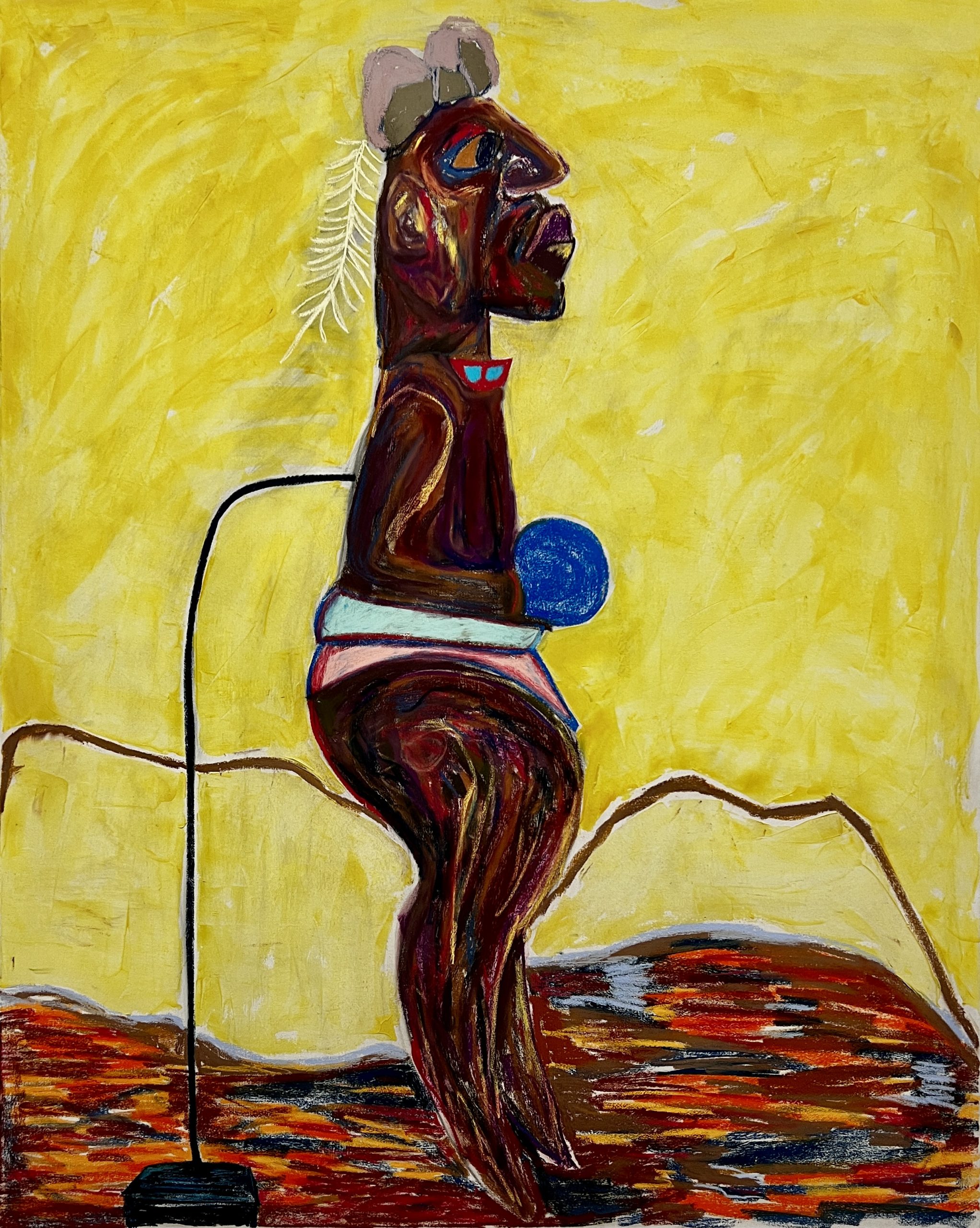
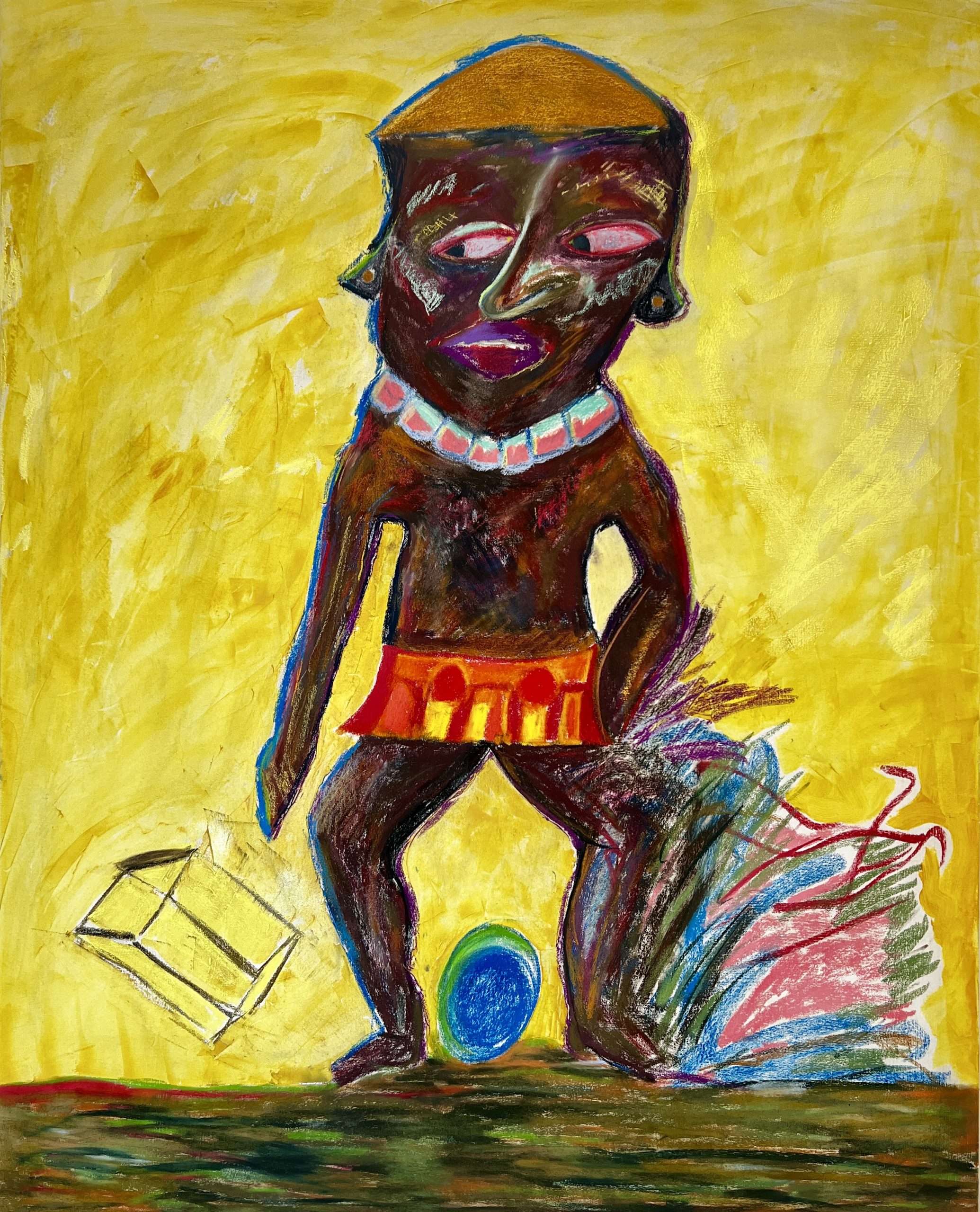
This practice-led PhD, situated at the Research Centre for Arts and Learning at Goldsmiths, University of London, centres on the Huastecan Female Ballplayer — a life-sized female athletic sculpture discovered outside Veracruz, Mexico around 1971 and not publicly exhibited until 2024. She is the only known life-sized representation of a female Huastecan athlete on record.
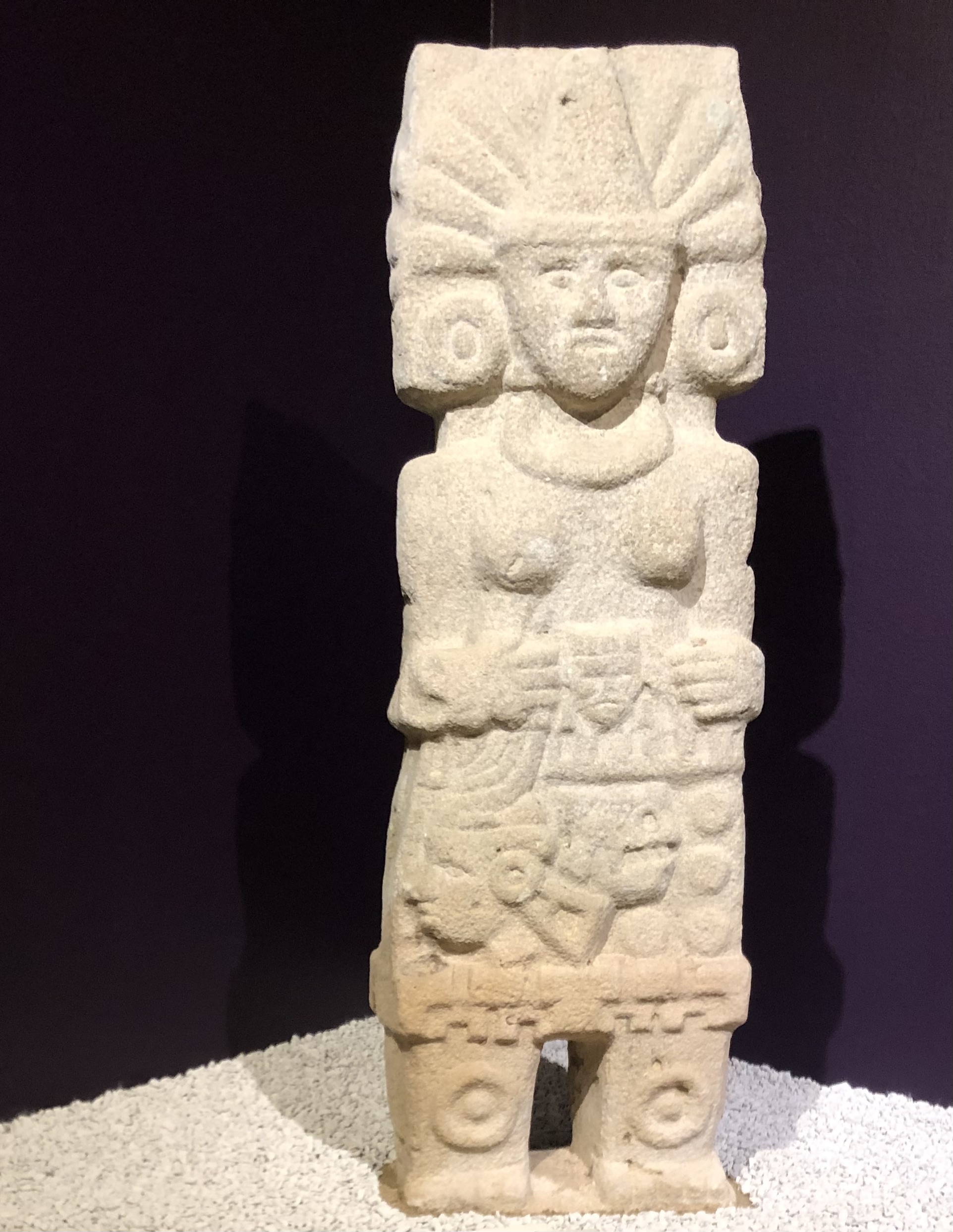
Through embodied drawing, painting, critical fabulation and somatic encounter, this research refuses the colonial misreadings that have governed her archival trajectory — and asks what forms of knowledge become possible when the body, movement and relational accountability are treated as legitimate epistemological sites rather than noise to be filtered out before serious scholarship begins.
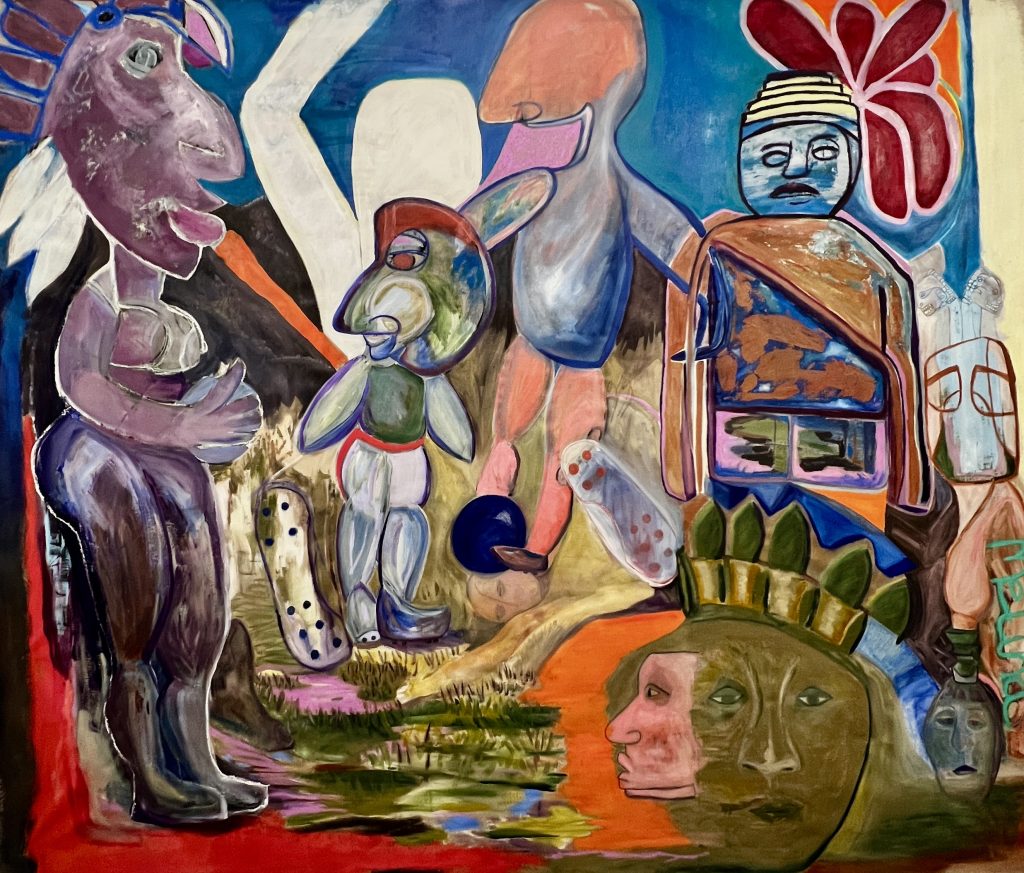
This research asks what it costs when Indigenous female bodies are absent from the archive — not as an academic abstraction, but as a lived condition. Who decides which bodies receive sustained scholarly attention? Whose athletic, ceremonial and cultural life gets theorised, and whose gets filed under “probably a woman” in a bracket with no evidence behind it?
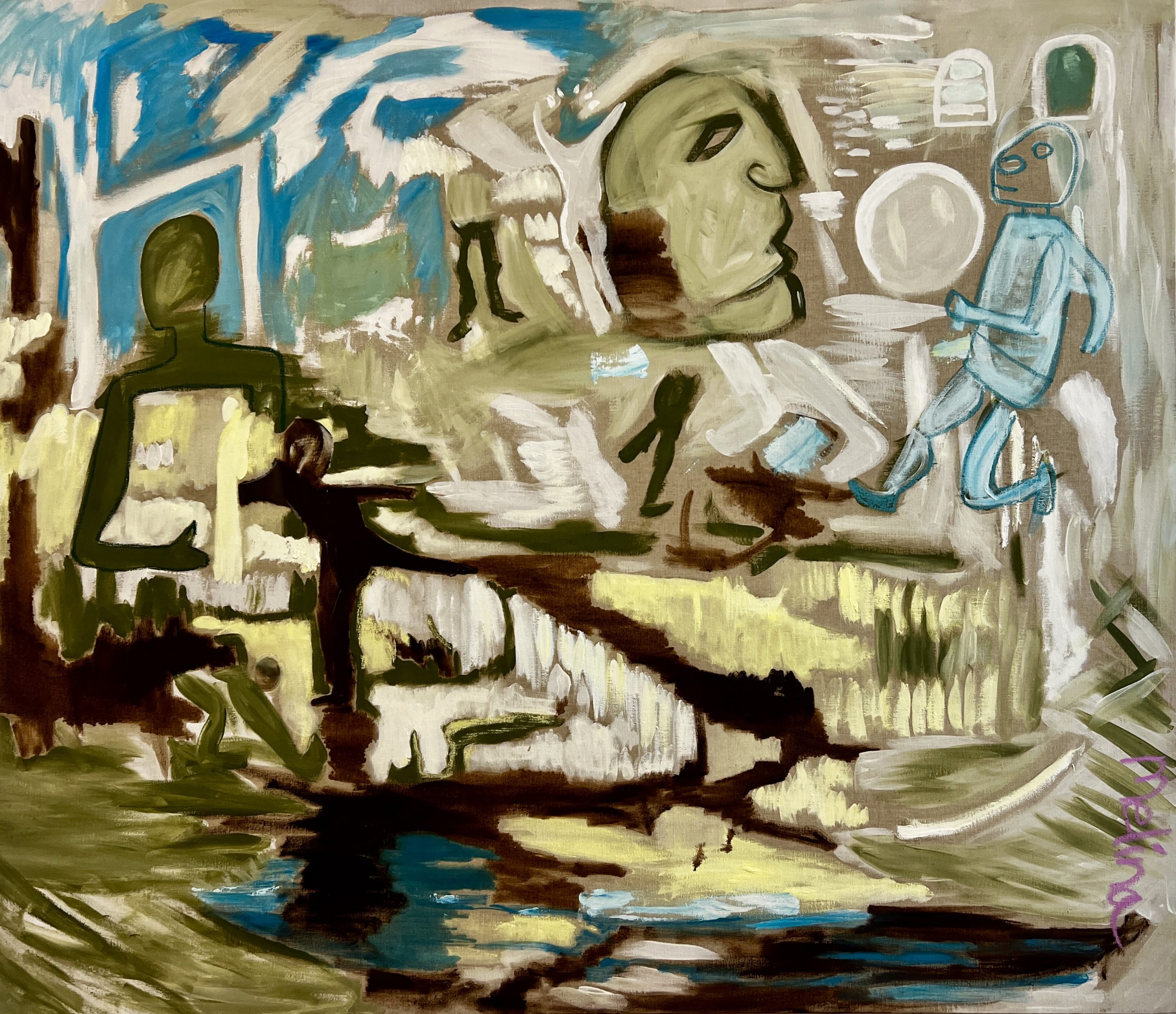
This is also a research project about girls. About what happens to a body that grows up without figures of identification in galleries, museums or curricula. About what it means to find the missing pillar yourself — through an internet search, through a flight to Chicago, through five days drawing on a gallery floor — and to build something permanent so the next girl doesn’t have to look so hard.
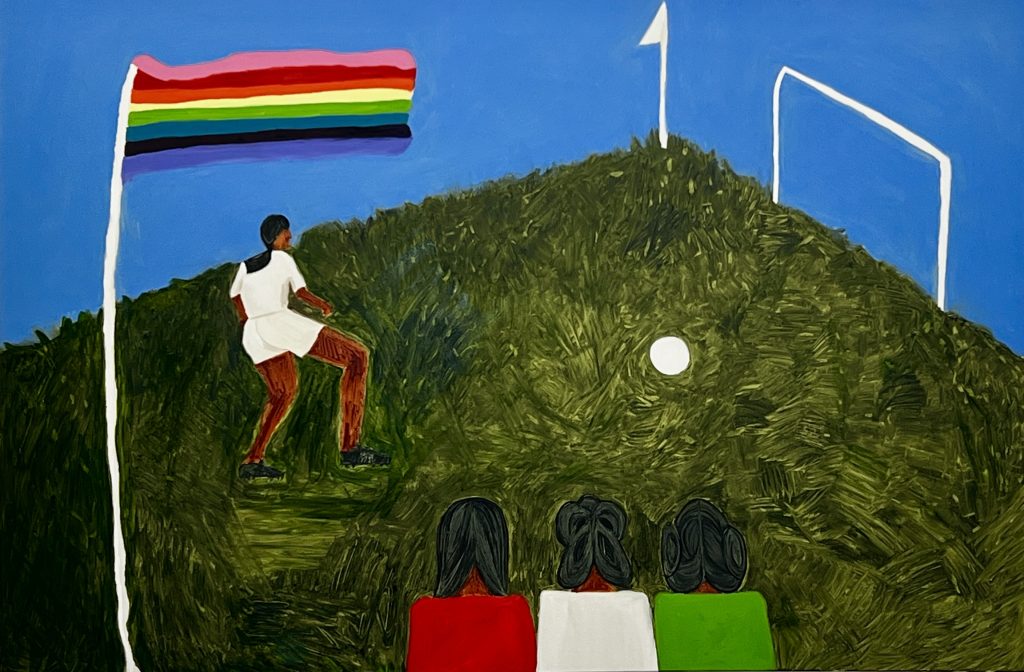
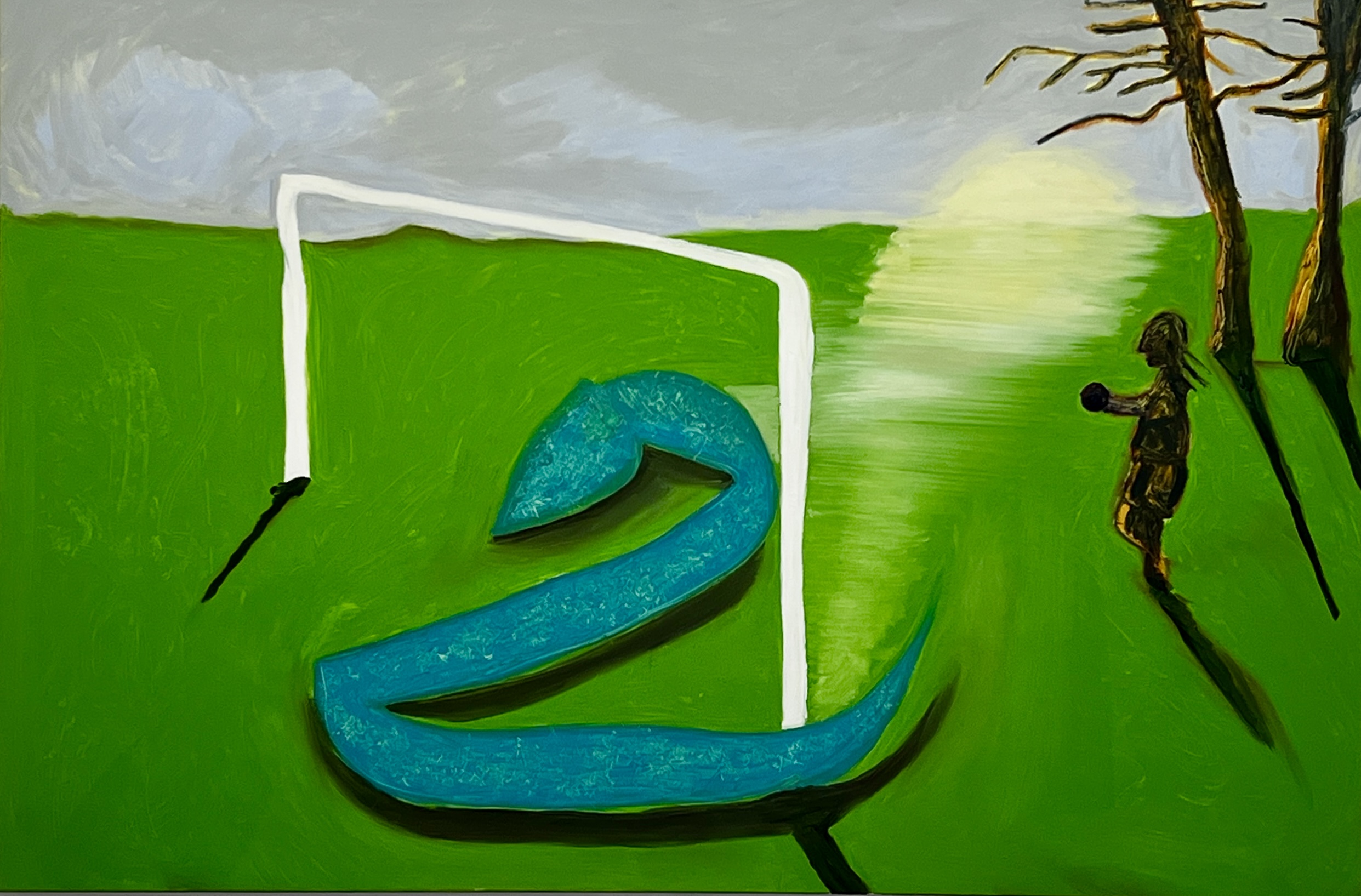
The research led me to study the Ballplayer Figurines in the Sainsbury Centre collection.
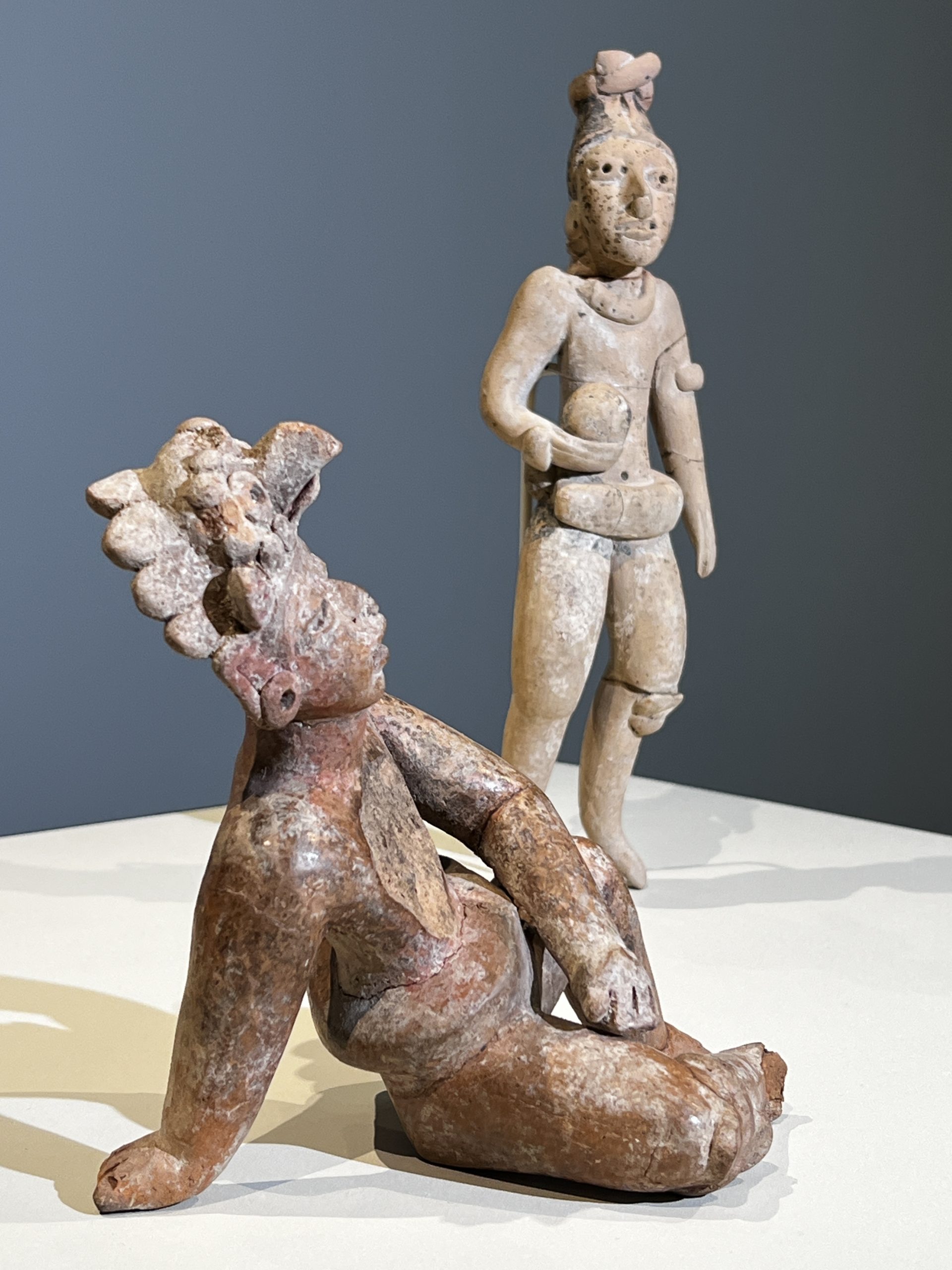
Here, these drawings are a dream of animation: the figurines break free from their display cases — stepping out of the cabinet and back into life. The works draw on an indigenous perspective to consider what it might mean for these figures to inhabit space on their own terms, outside the confines of the museum vitrine.